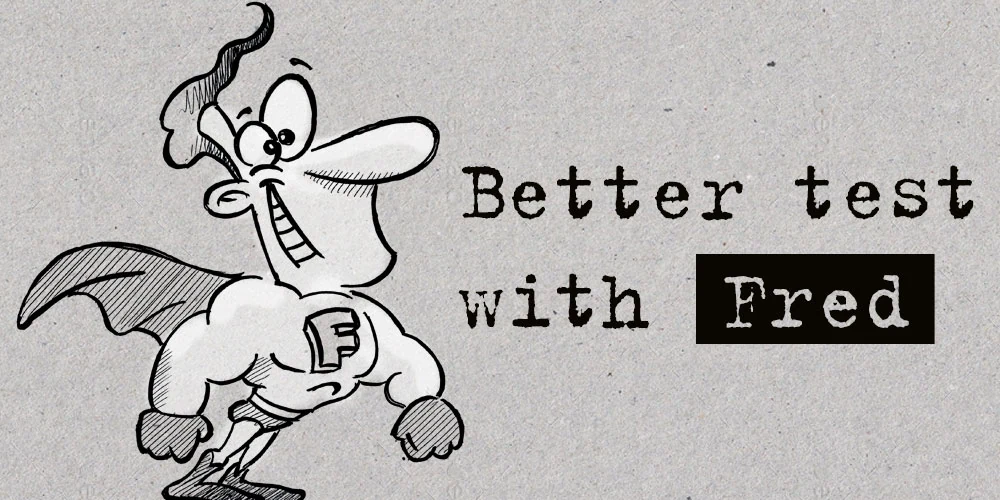
Meet Fred.
Fred did not attend the briefing. He does not know the terminology, has no idea what the designer intended and feels no obligation whatsoever to make your communication succeed. This makes him extremely useful.
Fred represents the person who encounters your work without all the knowledge that accumulated while you were making it. He may be distracted, impatient, visually imperfect, using an inconvenient device or simply unwilling to invest much effort in understanding something he never asked to see in the first place.
None of this makes Fred stupid. It makes him rather more representative of the real world than most people sitting around the project table.
Familiarity hides problems
Anybody who works on a project for long enough develops an unfortunate advantage: they already know how it works. The designer knows which element is clickable, the copywriter knows what the headline means and the marketing director understands the abbreviation.
The Fred Test deliberately removes all the invisible knowledge supplied by the project team. Instead of asking whether we understand something, it asks whether somebody with no reason to help us can understand it.
Fred tests assumptions, not intelligence
The idea is not to design everything for the lowest possible level of intelligence. That generally produces patronising communication and extremely dull brands. The objective is to identify unnecessary obstacles.
A sophisticated idea can still be clear. Intelligent copy does not need to be incomprehensible. Beautiful typography can still be readable. An original interface can still tell people where to click.
Five useful ways to employ Fred
- Copywriting — does the language communicate before it starts trying to impress?
- Legibility — can people comfortably read what you have designed?
- Concept — does the idea survive outside the room in which it was invented?
- Contrast — does essential information remain visible under imperfect conditions?
- Device — does the experience still work away from the equipment on which it was created?
Because sometimes the most useful person in the room is the one who was never in the room at all.
Have a branding problem worth solving?
Contact →